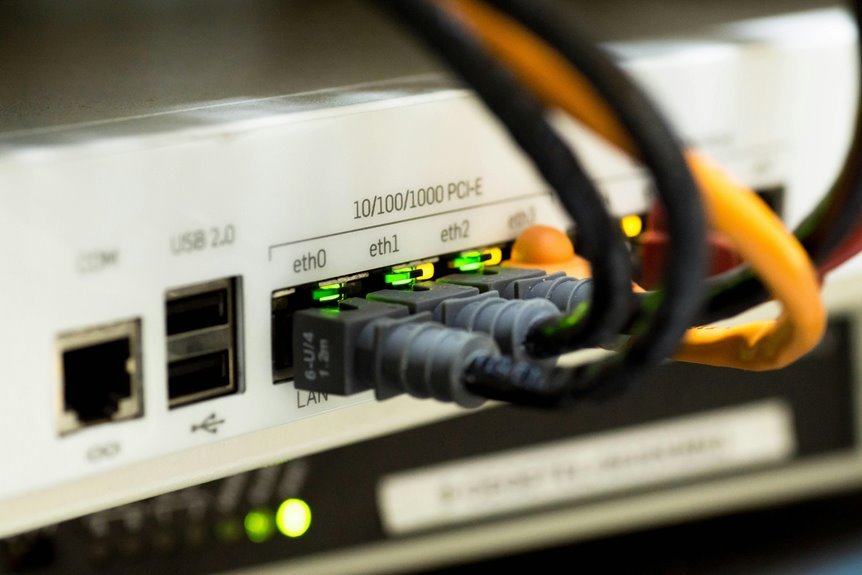

The Dynamic Digital Hub 889050564 Web Network presents a centralized, scalable framework for coordinating digital resources and endpoints. Its design emphasizes transparent governance, consent enforcement, and versioned artifacts. Proponents promise cross-domain collaboration with intelligent routing and edge-aware latency. Critics question the trade-offs between data sovereignty and performance, and the sufficiency of immutable logs for accountability. As architectures evolve, questions arise about real-world resilience and user autonomy—an invitation to see where the model holds up under pressure.
What Is the Dynamic Digital Hub 889050564 Web Network
The Dynamic Digital Hub 889050564 Web Network appears as a centralized framework designed to coordinate interlinked digital resources, services, and endpoints under a single, scalable architecture.
It remains unclear who governs orchestration or how consent is enforced.
The dynamic hub promises streamlined data workflows, yet complexity and potential bottlenecks invite scrutiny, raising questions about freedom, transparency, and user control.
How the Web Network Accelerates Collaboration and Data Workflows
How does the Web Network accelerate collaboration and data workflows? It enables cross-domain teams to share live datasets, governance controls, and versioned artifacts with minimal friction. Edge latency is minimized through localized processing, while intelligent routing preserves data sovereignty. The system discourages siloed work, promoting auditable collaboration and reproducible results, without compromising autonomy or governance standards. Skeptical yet curious, it invites rigorous evaluation.
Key Features and Security That Drive Reliability
What features and security measures most effectively ensure reliability in a dynamic web hub? The article examines modular fault tolerance, immutable logs, and granular access controls, while remaining skeptical of overpromising dashboards. Data governance frameworks and streamlined user onboarding curtail drift and risk, enabling transparent metrics. Reliability hinges on verifiable audits, minimal trust assumptions, and proactive anomaly detection without compromising freedom.
Deploying and Optimizing Your Dynamic Digital Hub Experience
Deploying and optimizing a dynamic digital hub requires translating reliability concepts into concrete, scalable practices. The approach favors measured experimentation over ideology, questioning assumptions while documenting results. Concept tuning emerges as iterative refinement, not superstition. Latency benchmarking provides objective guardrails, guiding configuration changes. Freedom-seeking practitioners balance performance and resilience, avoiding overfit solutions, converging toward robust, transparent architectures that endure evolving workloads and diverse users.
Conclusion
In the labyrinth where threads converge, the Dynamic Digital Hub acts as a patient cartographer, sketching routes that bend with the wind of access rights and consent. It audits every beacon, weighing latency against sovereignty as a seasoned shipmaster would. Skeptical yet hopeful, the system treats reliability as a coin with two faces: immutable logs and agile routing. Should trust be earned, or merely engineered? The allegorical compass remains both guide and question, steering curiosity toward verifiable reliability.